Live
ISDE subsidy 2026: € 2,950 activeAvg. COP: 3.8623 installers verified445 top-rated (≥ 4.5 ★)Avg. rating: 4.7 / 5311 municipalities coveredPayback avg. 7.8 yrsCO₂ reduction 61%Peak power tariff: € 0.31/kWhISDE subsidy 2026: € 2,950 activeAvg. COP: 3.8623 installers verified445 top-rated (≥ 4.5 ★)Avg. rating: 4.7 / 5311 municipalities coveredPayback avg. 7.8 yrsCO₂ reduction 61%Peak power tariff: € 0.31/kWh
Skip to content
ProvincesKnowledge BaseCalculatorAboutFind installer
Illustration for: Hybrid or all-electric heat pump? How to choose in 2026

Hybrid or all-electric heat pump? How to choose in 2026

Updated on: 15/04/2026

Hybrid or all-electric heat pump? How to choose in 2026

This is the question every prospective heat pump owner in the Netherlands faces. Do you go hybrid -- keeping the gas boiler as a safety net -- or make the full jump to all-electric and disconnect from gas entirely?

The short answer: it depends on your insulation, your budget, and your long-term plans. The long answer is below, with real numbers, honest trade-offs, and a clear framework for deciding.

What is the difference?

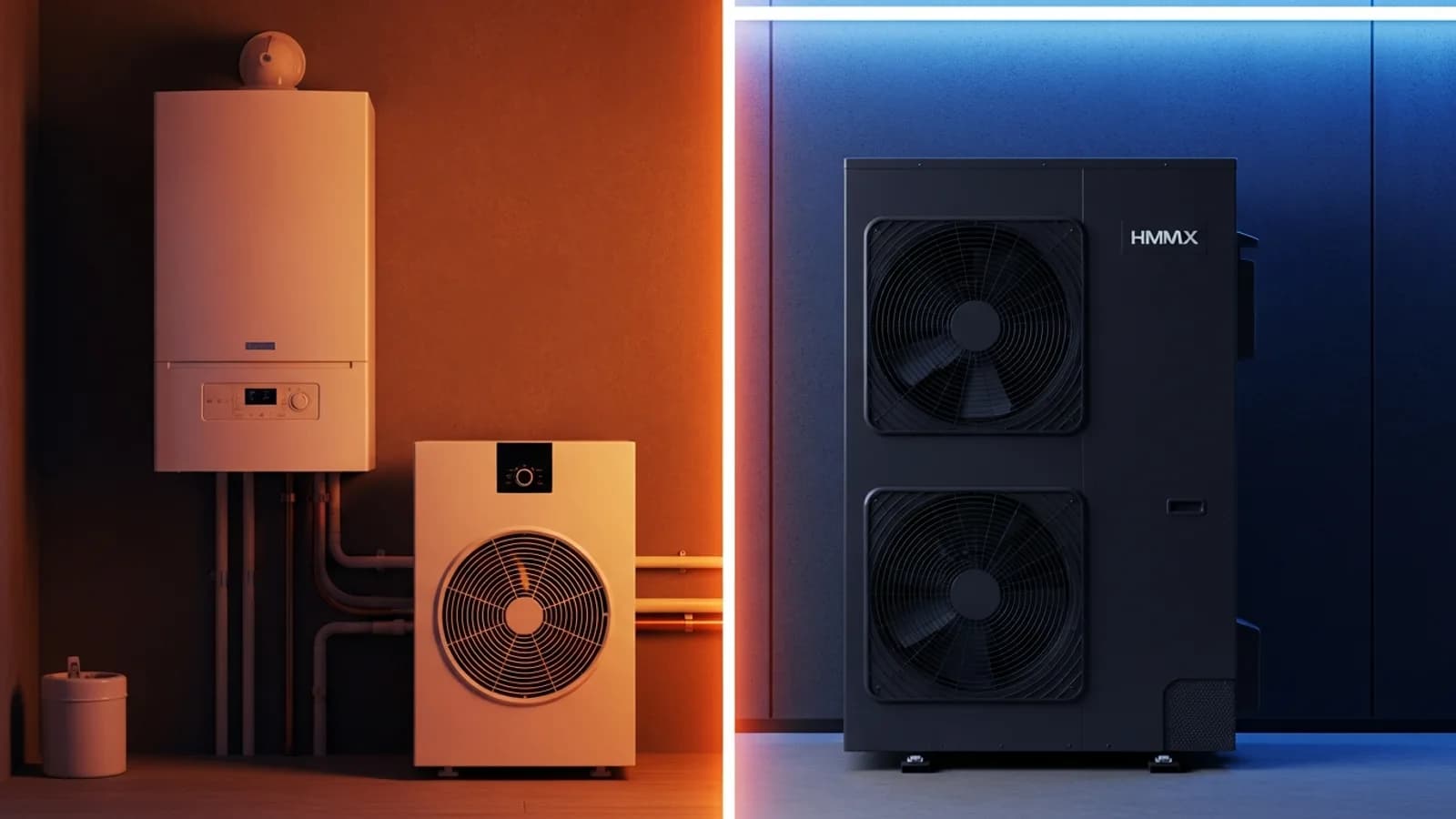
A hybrid heat pump works together with your existing HR gas boiler. When outdoor temperatures sit above the so-called bivalence point (usually 2-5 degrees Celsius), the heat pump does the heating. When it gets colder, the gas boiler takes over. You heat partly with electricity, partly with gas. Result: 50-70% reduction in gas consumption.

An all-electric heat pump replaces your gas boiler completely. All space heating and domestic hot water come from the heat pump, powered by electricity. No more gas bill, no gas connection needed. Your home is gas-free.

Feature Hybrid All-electric
Gas consumption 30-50% of original 0%
Gas boiler needed? Yes (existing HR boiler) No
Domestic hot water Via gas boiler Via heat pump + storage tank
Insulation requirement Moderate (label D-C sufficient) High (label B or better)
Heating system Existing radiators fine Underfloor heating or LT radiators needed
Investment (incl. install, before subsidy) 4,000 - 8,000 6,500 - 13,000
ISDE subsidy 2026 2,500 - 3,500 3,000 - 4,500
Net investment 1,500 - 5,500 3,500 - 9,500
Annual savings 600 - 900 1,000 - 1,400
Payback period 3 - 7 years 4 - 8 years

Pros and cons: an honest comparison

Hybrid heat pump

What works well:

The barrier to entry is low. You do not need to overhaul your heating system. Existing radiators? Fine. Mediocre insulation? The boiler catches the peaks. Installation takes one day, costs relatively little, and you start saving immediately. For the millions of Dutch homes with energy label C or D, this is the most practical option available.

The gas boiler as backup provides peace of mind. During a -10 degree Celsius cold snap with Siberian air sweeping across the Netherlands, it does not matter that the heat pump's COP drops to 1.8. The boiler steps in and your house stays warm. That certainty has value, especially for people experiencing heat pump technology for the first time.

What is less ideal:

You remain dependent on gas. The gas bill drops significantly but does not disappear. And as long as you have a gas connection, you pay the fixed delivery charges (approximately 200-250 euros per year). Long-term -- as the Netherlands aims to be gas-free by 2050 -- you will eventually need to transition to a complete solution.

The savings are more limited. Where an all-electric system takes your gas bill from 2,000 euros to zero, a hybrid brings it down to 600-1,000 euros. The difference in net annual savings is 200-500 euros in favour of all-electric.

All-electric heat pump

What works well:

You are done. No gas, no dependence on fluctuating gas prices, no annual gas boiler maintenance. CO2 reduction is maximised: 100% of your heating comes from electricity, and if that electricity comes from solar panels, you heat almost carbon-neutral.

The higher ISDE subsidy and greater annual savings mean all-electric delivers stronger returns over time -- provided your home is suitable.

And there is the future argument. The Netherlands is going gas-free. Whether that happens in 2040 or 2050, it is happening. With an all-electric heat pump, you will not need to reinvest in ten years.

What is less ideal:

The investment is substantially higher. Not just the heat pump itself -- you also need a hot water storage tank (700-1,500 euros), potentially underfloor heating or LT radiators (3,000-8,000 euros extra), and possibly an electrical panel upgrade.

Then there is insulation. An all-electric heat pump delivers water at 35-45 degrees Celsius. Existing radiators are designed for 70-80 degrees. In a poorly insulated home with old radiators, you simply will not get warm. You need to insulate first -- roof, walls, floor, HR++ glazing -- and that can easily cost 10,000-25,000 euros on top of the heat pump.

During extreme cold (-5 degrees Celsius and below), the efficiency of air-source heat pumps drops noticeably. The COP falls to 2 or lower, meaning the system works harder and consumes more electricity. In a harsh winter, the electricity bill can spike. A ground source heat pump does not have this problem, but then you are looking at 15,000-30,000 euros invested.

Choose hybrid if...

  • Your home has energy label C, D, or lower
  • You want to keep your existing radiators
  • You do not want to invest more than 10,000 euros upfront
  • Your home was built before 1990 and has not been fully insulated
  • You want to save money for the next 5-10 years and potentially upgrade to all-electric later
  • You live in a terraced or semi-detached home with a standard central heating system

The hybrid heat pump is essentially the transitional solution. Not perfect, not fully green, but enormously practical. And with a net investment sometimes under 2,000 euros after subsidy, the financial threshold is almost non-existent.

Choose all-electric if...

  • Your home has energy label A or B (or you are prepared to insulate first)
  • You have underfloor heating or are willing to install LT radiators
  • You want to be completely gas-free
  • You have or plan to install solar panels (to offset the heat pump's electricity consumption)
  • You are willing to invest 6,000-13,000 euros (before subsidy)
  • You have a newer home (post-2000) with reasonable insulation already in place

A particularly strong case for all-electric: newer homes with energy label A or B, underfloor heating, and 10+ solar panels. In that scenario, you save 1,200-1,600 euros per year and recover the investment in 4-5 years. Read more in our guide on heat pumps and solar panels.

Insulation: the make-or-break factor

We cannot stress this enough. Your home's insulation determines which heat pump type is right for you.

Insulation measure RC value Impact on heat pump performance
Roof insulation RC 3.5+ Reduces heat loss by 15-25%
Wall insulation (cavity) RC 2.5+ Reduces heat loss by 20-30%
Floor insulation RC 3.5+ Reduces heat loss by 10-15%
HR++ glazing Ug < 1.1 Reduces heat loss via windows by 40-60%
Draught-proofing -- Reduces draught losses by 10-15%

A home with wall RC values below 2.0 is virtually unsuitable for all-electric heating without major insulation upgrades. The heat pump has to work too hard, efficiency drops, electricity costs rise, and comfort suffers.

The rule of thumb: if your annual gas consumption exceeds 1,800 m3, your home is probably insufficiently insulated for all-electric without modifications. Under 1,200 m3? You are well-insulated and all-electric is a realistic option.

Financial comparison over 15 years

Let us calculate two scenarios for an average Dutch terraced house.

Scenario A: Hybrid heat pump

  • Investment: 6,000 euros
  • ISDE subsidy: 3,000 euros
  • Net investment: 3,000 euros
  • Annual gas savings: 800 m3 x 1.40 euro = 1,120 euros
  • Additional electricity cost: 1,200 kWh x 0.28 euro = 336 euros
  • Net savings per year: 784 euros
  • Heat pump maintenance: 150 euros/year
  • Gas boiler maintenance: 100 euros/year (you keep the boiler)
  • Net savings after maintenance: 534 euros/year
  • Over 15 years saved: 8,010 euros (net: 5,010 euros after investment)

Scenario B: All-electric air-to-water heat pump

  • Investment: 10,000 euros
  • ISDE subsidy: 4,000 euros
  • Net investment: 6,000 euros
  • Annual gas savings: 1,500 m3 x 1.40 euro = 2,100 euros
  • Additional electricity cost: 3,500 kWh x 0.28 euro = 980 euros
  • Net savings per year: 1,120 euros
  • Heat pump maintenance: 150 euros/year
  • No gas boiler maintenance: +100 euros
  • Net savings after maintenance: 1,070 euros/year
  • Over 15 years saved: 16,050 euros (net: 10,050 euros after investment)

All-electric wins financially over 15 years, but only if your home is suitable. The extra 3,000 euros net investment translates to 5,000 euros additional savings over the system's lifetime.

The future: what happens after 2030?

The Netherlands aims to be gas-free by 2050. What does that mean for your choice today?

Choosing hybrid now buys you time. Heat pump technology is advancing rapidly. In 10 years, all-electric systems will be cheaper, more efficient, and simpler to install. You can make the switch then without scrapping a system that is only five years old.

Choosing all-electric now means you are ready for the future. No second major investment needed. But you pay the premium today.

There is no wrong answer. Hybrid is a smart intermediate step. All-electric is the definitive solution. Both are better than doing nothing and continuing to burn gas.

Key takeaways

  • Hybrid: low investment, suitable for moderately insulated homes, 50-70% gas savings, boiler stays as backup.
  • All-electric: higher investment, requires good insulation, 100% gas-free, higher annual savings.
  • Your home's insulation is the determining factor. Label C or lower? Go hybrid. Label B or better? All-electric is feasible.
  • Financially, all-electric wins over 15 years, but only in a suitable home.
  • Both options are eligible for ISDE subsidy.

Frequently asked questions

Can I switch from hybrid to all-electric later?

Yes. You replace the hybrid heat pump with a more powerful all-electric model and remove the gas boiler. Keep in mind you will probably also need to adapt your heating distribution system (underfloor heating or LT radiators). Total cost: 5,000-12,000 euros.

How much gas does a hybrid heat pump save?

On average 50-70% of your gas consumption. On a typical consumption of 1,500 m3 per year, that is 750-1,050 m3 saved. At the current gas price of approximately 1.40 euros/m3, that translates to 1,050-1,470 euros per year in gas savings. Additional electricity costs of 300-400 euros offset this partially.

Is the hybrid heat pump future-proof?

Medium-term (10-15 years): yes. You save immediately and the system lasts 15-20 years. Long-term (towards 2050): you will eventually need to switch to a gas-free solution. Think of the hybrid as a sensible stepping stone, not a final destination.

What if my home has energy label E or F?

Start with insulation. A heat pump -- hybrid or all-electric -- in an energy label E/F home is deeply inefficient. Invest in roof insulation, wall insulation, and HR++ glazing first. Then the heat pump. Read our guide on heat pumps in existing homes for the right approach.

Will hybrid heat pumps become mandatory in the Netherlands?

There have been rumours for years about making hybrid heat pumps mandatory when replacing gas boilers. As of April 2026, there is no legal obligation. The government strongly encourages the switch through the ISDE subsidy and the Climate Agreement (Klimaatakkoord). The probability of a mandate before 2030 is real but not yet confirmed.

Can an all-electric heat pump heat my house at -15 degrees Celsius?

Yes, but efficiency drops significantly. At -15 degrees, an air-to-water heat pump still produces heat, but with a COP of roughly 1.5-2.0, meaning high electricity consumption. In practice, -15 degrees Celsius rarely occurs in the Netherlands -- the coldest moments in a typical Dutch winter range from -5 to -8 degrees. A properly sized all-electric heat pump handles that comfortably.

Need help deciding?

The installer you choose can help you decide between hybrid and all-electric. A good installer will assess your home, calculate heat loss, and recommend the right type. On warmtepompkiezen.nl, you can compare installers in your region.

Find an installer near you

Related articles

Frequently asked questions

Can I switch from hybrid to all-electric later?

Yes. You replace the hybrid heat pump with a more powerful all-electric model and remove the gas boiler. Keep in mind you will probably also need to adapt your heating distribution system (underfloor heating or LT radiators). Total cost: 5,000-12,000 euros.

How much gas does a hybrid heat pump save?

On average 50-70% of your gas consumption. On a typical consumption of 1,500 m3 per year, that is 750-1,050 m3 saved. At the current gas price of approximately 1.40 euros/m3, that translates to 1,050-1,470 euros per year in gas savings. Additional electricity costs of 300-400 euros offset this partially.

Is the hybrid heat pump future-proof?

Medium-term (10-15 years): yes. You save immediately and the system lasts 15-20 years. Long-term (towards 2050): you will eventually need to switch to a gas-free solution. Think of the hybrid as a sensible stepping stone, not a final destination.

What if my home has energy label E or F?

Start with insulation. A heat pump -- hybrid or all-electric -- in an energy label E/F home is deeply inefficient. Invest in roof insulation, wall insulation, and HR++ glazing first. Then the heat pump. Read our [guide on heat pumps in existing homes][link:/gids/heat-pump-existing-home] for the right approach.

Will hybrid heat pumps become mandatory in the Netherlands?

There have been rumours for years about making hybrid heat pumps mandatory when replacing gas boilers. As of April 2026, there is no legal obligation. The government strongly encourages the switch through the [ISDE subsidy](https://www.rvo.nl/subsidies-financiering/isde/woningeigenaren) and the [Climate Agreement (Klimaatakkoord)](https://www.klimaatakkoord.nl/). The probability of a mandate before 2030 is real but not yet confirmed.

Can an all-electric heat pump heat my house at -15 degrees Celsius?

Yes, but efficiency drops significantly. At -15 degrees, an air-to-water heat pump still produces heat, but with a COP of roughly 1.5-2.0, meaning high electricity consumption. In practice, -15 degrees Celsius rarely occurs in the Netherlands -- the coldest moments in a typical Dutch winter range from -5 to -8 degrees. A properly sized all-electric heat pump handles that comfortably. ## Need help deciding? The installer you choose can help you decide between hybrid and all-electric. A good installer will assess your home, calculate heat loss, and recommend the right type. On warmtepompkiezen.nl, you can compare installers in your region. [Find an installer near you][link:/provincie/utrecht] ## Related articles - [Best heat pump 2026: comparison by type and brand][link:/gids/best-heat-pump] - [What does a heat pump cost in the Netherlands in 2026?][link:/gids/heat-pump-costs] - [Heat pump in an existing home: is your house suitable?][link:/gids/heat-pump-existing-home]

Ready to find an installer?

Compare certified heat pump installers near you. View ratings, opening hours and contact details — free and without obligation.

Find an installer

Related articles