Heat pump problems and breakdowns: the 12 most common faults and fixes
Heat pump problems and breakdowns: the 12 most common faults and fixes
A heat pump is robust but not indestructible. Faults arise mostly from installation errors, poor maintenance or an incorrectly configured heating curve. This article covers the 12 most common problems, with practical solutions and when to call a technician.
First step: look up the error code
Virtually all modern heat pumps display an error code on-screen or in the app at fault. That code is brand-specific — Daikin E8-02 is different from a Mitsubishi P5. Always look up the code in the manual or the manufacturer database before calling a technician. That easily saves €150 in call-out fees.
1. Heat pump doesn't heat enough
Symptoms: House doesn't reach temperature, especially at outside temperatures below 5 °C.
Causes and fixes:
- Heating curve set too low. A heat pump works from a heating curve — the flow temperature depends on outdoor temperature. In many installations this is set too flat. Ask your installer to raise the curve by 5 °C at the cold end.
- Radiators too small. Old convector radiators need 70-80 °C flow; a heat pump delivers 35-55 °C. Replacing with low-temperature radiators (Jaga Strada, Stelrad) or underfloor heating is the structural fix.
- Insufficient insulation. At label E, F or G virtually no heat pump works efficiently. Improve insulation first (roof, floor, draught sealing) or choose a hybrid for now.
2. Outdoor unit suddenly noisier
Symptoms: Buzzing or rattling not heard before.
Causes and fixes:
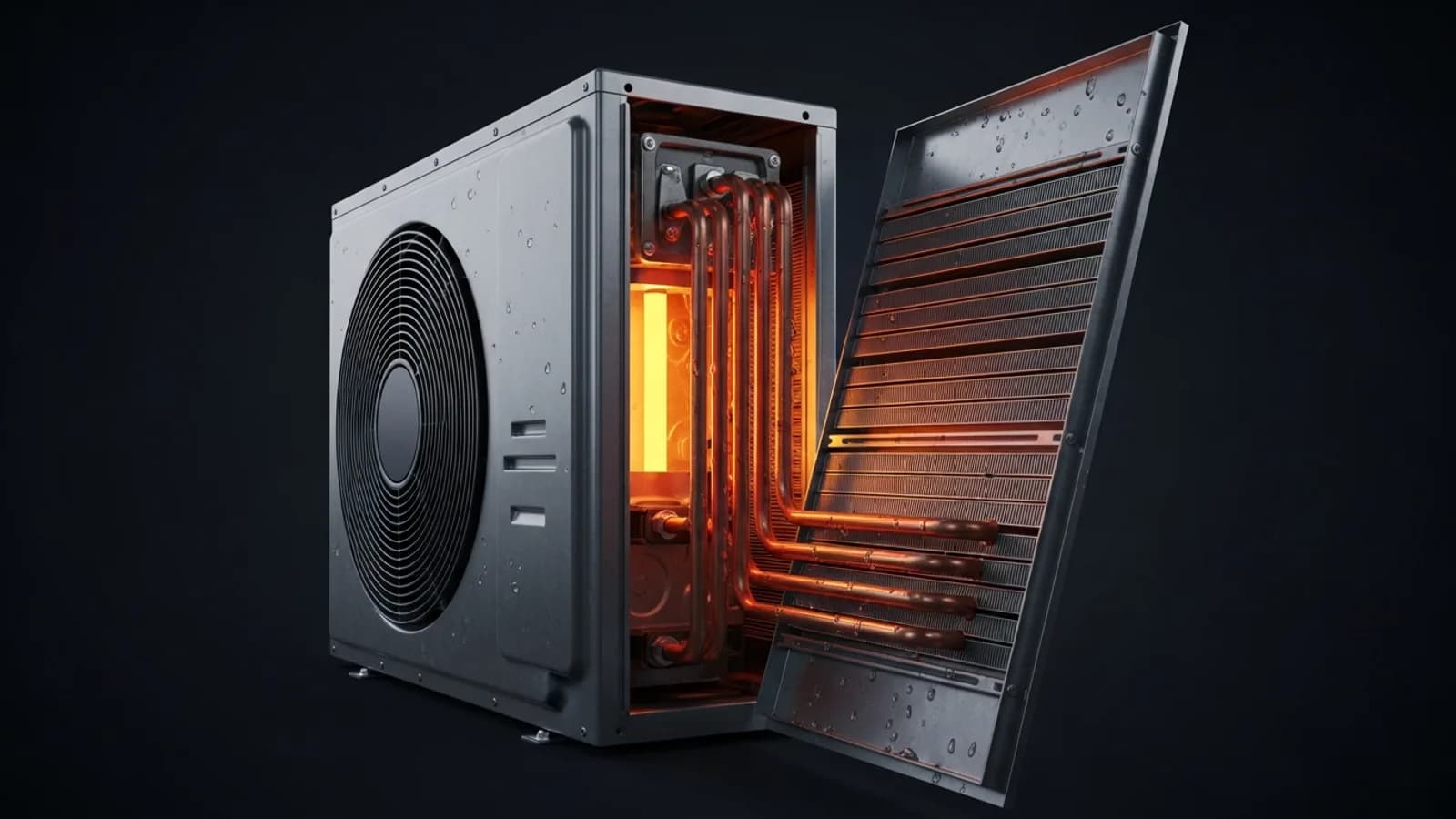
- Ice build-up on evaporator. Around 0 °C with high humidity, frost forms on the evaporator. The unit runs a defrost cycle — this sounds different from normal operation but is not a fault.
- Loose panel or cover. Vibration can loosen a panel. Check all screws are tight.
- Worn fan bearing. After 10-15 years the fan bearing may wear. Replacement: €200-€400 including labour.
3. Hybrid heat pump switches to the gas boiler too often
Symptoms: The boiler kicks in at 10-12 °C outside, making gas consumption higher than expected.
Causes and fixes:
- Bivalence point set too high. The temperature at which the boiler activates is often factory-set around 5 °C. Lower to -2 °C or -5 °C (depending on insulation) for maximum heat pump operation.
- Wrong heating strategy. In parallel strategy both systems supply together; in alternating, only the heat pump below the bivalence point. Ask the installer for "alternating modulating strategy".
4. Unexpectedly high electricity bill
Symptoms: Electricity consumption much higher than a calculated SCOP of 4.0 would predict.
Causes and fixes:
- Electric auxiliary heater active. Many installations have a 6-9 kW electric element that kicks in when demand exceeds the heat pump. Running unnoticed, it wipes out your efficiency. Check in the app or with the installer.
- Wrong (too steep) heating curve. High flow temperature means low COP. Flatter curve with longer runtime is more efficient.
- Refrigerant leak. Loss of R290/R32 forces the heat pump to work harder. Annual leak-tightness check under the EU F-gas Regulation is mandatory for systems with >3 kg refrigerant.
5. Error code E-01 / E-05 (Daikin, LG)
Meaning: Pressure fault in the refrigerant circuit. Usually too little airflow at the outdoor unit (blocked grille, leaves, snow) or fouled condenser.
Fix: Clean outdoor unit with garden hose (low pressure), clear obstacles within 50 cm. If the code returns: call installer for pressure test.
6. Error code P5 / P6 (Mitsubishi)
Meaning: Condensate drain blocked. Water backs up into the unit.
Fix: Check the drain on the bottom of the outdoor unit. Clear ice or debris. Recurring issue: replace insulation around drain line.
7. Leaking condensate water
Symptoms: Puddle under indoor unit or in plant room.
Causes and fixes:
- Blocked condensate drain. Flush with warm water and vinegar.
- Cracked evaporator tray. Technical defect, replacement by technician required. Cost: €350-€700.
8. Central heating starts "banging"
Symptoms: Hard ticks in pipes at start/stop.
Causes and fixes:
- Air in system. Bleed radiators and circulator pump. DIY or installer.
- Water hammer from fast valves. Ask installer to damp the three-way valve or inspect thermostatic valves.
9. Heat pump won't start
Symptoms: Display on, but no operation.
Causes and fixes:
- Tripped breaker. Check the consumer unit — heat pumps usually have a dedicated 16-25 A circuit.
- Safety lockout after fault. Reset via main switch (10 seconds off). Still problematic: technician.
- Return-water temperature too high. With return >50 °C the pump goes into safety. Lower thermostat, wait 30 minutes.
10. Hot water not hot enough
Symptoms: Shower cools quickly, boiler won't reach 60 °C.
Causes and fixes:
- Legionella cycle disabled. Weekly heating to 60 °C is legally required for collective systems and strongly advised for your own boiler. Enable via installer.
- Magnesium anode consumed. Anode wears after 5-8 years. Replacement: €80-€150.
- Undersized boiler. Standard 150 litres is tight for 4+ people. Consider 200 or 250 litres.
11. Heat pump does nothing in severe frost
Symptoms: At -10 °C or colder the outdoor unit cuts out.
Causes and fixes:
- Outside operating envelope. Older R410A units often work to -15 °C, newer R290 to -25 °C. Check manufacturer spec.
- Electric auxiliary kicks in. Normal behaviour, not a fault. Efficiency temporarily drops to 1.0 (direct electric heating).
12. Indoor unit drips / mould
Symptoms: Water droplets around indoor unit, mould patches.
Causes and fixes:
- Condensation from poor pipe insulation. Cold flow pipe forms condensation. Have installer add insulation.
- Overpressure in expansion vessel. Bleed to 1-1.5 bar. Persisting: replace expansion vessel (€120).
Warranty and liability
Standard manufacturer warranty is 2-5 years on parts, often 1 year on labour. A certified InstallQ installer sometimes offers extended warranty (5-10 years), provided you can show annual maintenance. Keep all service receipts. STEK certification is mandatory for work on the refrigerant circuit — work by non-certified technicians can void warranty.
Frequently asked questions
How often does a heat pump fail?
Average failure rate is 2-4% per year, comparable to a gas boiler. Most breakdowns are software- or installation-related, not hardware.
Can I reset a heat pump myself?
Yes. Turn the main switch off for 10-30 seconds and back on. Then wait 15 minutes before operation (compressor protection).
What does a technician cost for a breakdown?
Call-out fee: €75-€150. Hourly labour: €70-€110. Small repairs (electronics, sensor): 1-2 hours. Major (compressor, evaporator): 4-8 hours plus parts.
When does warranty expire?
Work by non-STEK technicians on the refrigerant circuit, missing annual maintenance, or installation outside manufacturer specs (e.g. outside temperature range).
Should I take out a maintenance contract?
For warranty retention often mandatory, and financially sensible: €100-€200 per year versus €150-€250 for a one-off visit. Small problems get caught earlier.
Frequently asked questions
How often does a heat pump fail?
Average failure rate is 2-4% per year, comparable to a gas boiler. Most breakdowns are software- or installation-related, not hardware.
Can I reset a heat pump myself?
Yes. Turn the main switch off for 10-30 seconds and back on. Then wait 15 minutes before operation (compressor protection).
What does a technician cost for a breakdown?
Call-out fee: €75-€150. Hourly labour: €70-€110. Small repairs (electronics, sensor): 1-2 hours. Major (compressor, evaporator): 4-8 hours plus parts.
When does warranty expire?
Work by non-STEK technicians on the refrigerant circuit, missing annual maintenance, or installation outside manufacturer specs (e.g. outside temperature range).
Should I take out a maintenance contract?
For warranty retention often mandatory, and financially sensible: €100-€200 per year versus €150-€250 for a one-off visit. Small problems get caught earlier.