Warmtepomp in een bestaande woning: kan dat bij jouw huis?
Warmtepomp in een bestaande woning: kan dat bij jouw huis?
De helft van de Nederlandse woningvoorraad is gebouwd voor 1980. Dat zijn huizen met spouwmuren zonder isolatie, enkel of dubbel glas, en een cv-ketel die op volle toeren draait van oktober tot april. Past daar een warmtepomp in?
Het eerlijke antwoord: dat hangt ervan af. Een warmtepomp kan in vrijwel elke bestaande woning, maar niet elke warmtepomp past in elke woning. En soms is de volgorde "eerst isoleren, dan warmtepomp" niet een optie maar een absolute voorwaarde.
De geschiktheidscheck: 7 vragen over jouw huis
Loop deze vragen door. Ze geven je een eerste indicatie of je woning klaar is voor een warmtepomp, of dat er eerst werk aan de winkel is.
1. Wat is je energielabel?
- Label A of B: uitstekend geschikt voor all-electric warmtepomp
- Label C: geschikt voor all-electric met kleine aanpassingen, ideaal voor hybride
- Label D: hybride warmtepomp is de veiligste keuze, all-electric alleen na isolatieverbetering
- Label E, F of G: eerst isoleren, daarna warmtepomp
Geen energielabel? Dan kun je je jaarlijks gasverbruik als indicator gebruiken. Onder de 1.200 m3 per jaar: goede isolatie. Tussen 1.200 en 1.800 m3: matige isolatie. Boven 1.800 m3: onvoldoende isolatie voor all-electric.
2. Hoe is je dak geisoleerd?
Een dak zonder isolatie laat 25-30% van je warmte ontsnappen. De minimale RC-waarde voor een geschikt dak is 2,5; ideaal is 3,5 of hoger. Dakisolatie is doorgaans de goedkoopste isolatiemaatregel (1.500-4.000 euro) en levert de grootste besparing op.
3. Heeft je huis spouwmuurisolatie?
De meeste woningen gebouwd tussen 1920 en 1975 hebben een ongedijkte spouw. Spouwmuurisolatie kost 1.000-2.500 euro voor een gemiddelde tussenwoning en brengt de RC-waarde van de gevel naar 1,5-2,5. Niet spectaculair, maar een significante verbetering.
Woningen gebouwd na 1985 hebben vaak al spouwisolatie. Woningen van voor 1920 hebben doorgaans massieve muren zonder spouw -- daar is binnenisolatie of buitenisolatie nodig, wat duurder en complexer is.
4. Welk type glas zit er in je ramen?
Enkel glas: vervangen. Dubbel glas van voor 2000: vervangen door HR++ of triple glas levert forse besparing op. HR++ glas of nieuwer: prima.
Het verschil is enorm. Enkel glas heeft een U-waarde van 5,8 W/m2K. HR++ glas zit op 1,1 W/m2K. Dat is vijf keer beter gesoleerd. Bij een woning met veel raamoppervlak (erkers, serre) maakt glaskeuze een wereld van verschil.
5. Heb je vloerverwarming of radiatoren?
Vloerverwarming: perfect. De lage aanvoertemperatuur van 35-40 graden Celsius die een warmtepomp levert, is precies wat vloerverwarming nodig heeft.
Radiatoren: het hangt af van het type. Oude gietijzeren radiatoren die ontworpen zijn voor 90 graden Celsius watertemperatuur zijn niet geschikt. Moderne convectorradiatoren of lage-temperatuurradiatoren (LT-radiatoren) werken met 45-55 graden en zijn prima bruikbaar.
Moet je radiatoren vervangen? Reken op 200-500 euro per radiator, inclusief installatie. Bij een gemiddelde woning met 8 radiatoren is dat 1.600-4.000 euro.
6. Hoe ziet je meterkast eruit?
Een warmtepomp trekt piekbelasting van 2.000-4.000 watt. In combinatie met een inductiekookplaat, wasmachine en eventueel een elektrische auto kan je huidige aansluiting te krap worden. De meeste bestaande woningen hebben een 1x25A of 1x35A aansluiting.
Moet je overstappen naar 3x25A? Dat kost circa 300-600 euro en moet worden aangevraagd bij je netbeheerder (Liander, Stedin, Enexis). Levertijd: 4-8 weken.
7. Is er ruimte voor een buitenunit?
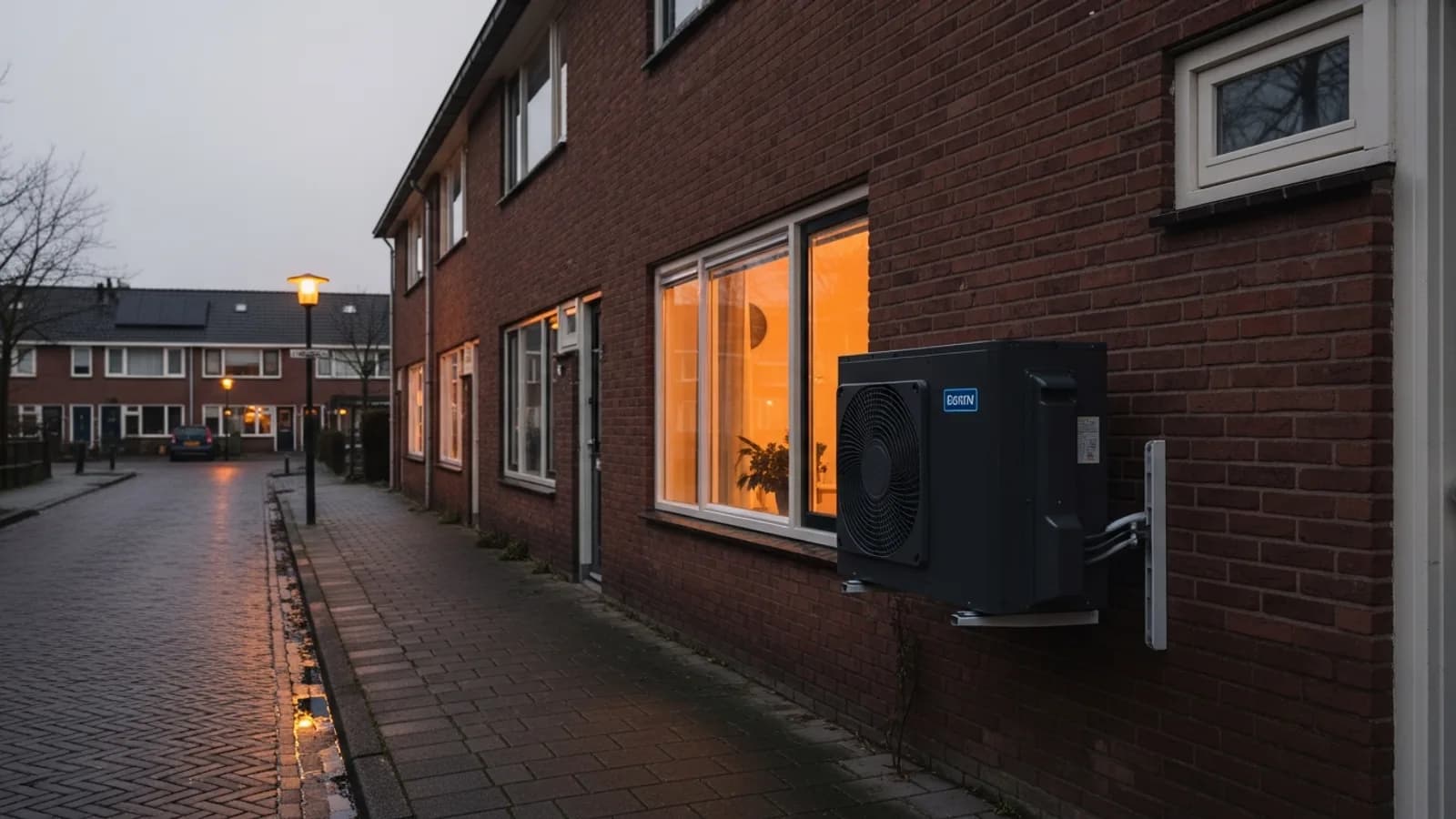
De buitenunit van een warmtepomp is ongeveer zo groot als een airco-buitenunit: 80 x 60 x 30 centimeter tot 120 x 100 x 40 centimeter voor grotere modellen. Hij moet vrij staan in de buitenlucht, liefst niet tegen de slaapkamermuur van de buren, en niet in een afgesloten nis waar de luchtcirculatie stagneert.
Bij appartementen en woningen zonder tuin kan de plaatsing lastig zijn. Een plat dak is een optie, mits de constructie het gewicht draagt.
De juiste volgorde: eerst isoleren, dan warmtepomp
Dit is misschien wel het belangrijkste advies in dit hele artikel. De volgorde maakt duizenden euro's verschil.
Waarom eerst isoleren?
Een goed geisoleerde woning heeft minder verwarmingsvermogen nodig. Dat betekent een kleinere warmtepomp, die goedkoper is in aanschaf. Een warmtepomp van 5 kW kost 500-1.500 euro minder dan een van 10 kW. Bovendien draait een kleinere warmtepomp in een geisoleerde woning efficienter (hogere SCOP), waardoor de stroomkosten lager zijn.
De renovatievolgorde:
- Dakisolatie (RC 3,5+)
- Gevelisolatie (RC 2,5+)
- Vloerisolatie (RC 3,5+)
- HR++ glas of triple glas
- Kierdichting
- Warmtepomp installeren
- Eventueel zonnepanelen
Doe je het andersom -- eerst warmtepomp, dan isoleren -- dan heb je een te groot dimensioneerde warmtepomp die na isolatie te veel vermogen heeft. Die draait dan inefficient (te veel start-stopgedrag) en gaat sneller stuk.
Welk type warmtepomp voor welk huis?
Een snelle keuzehulp op basis van je woningtype en bouwjaar.
| Woningtype | Bouwjaar | Energielabel (geschat) | Aanbevolen type | Voorwaarden |
|---|---|---|---|---|
| Tussenwoning | Na 2000 | A-B | All-electric (lucht-water) | Vloerverwarming of LT-radiatoren |
| Tussenwoning | 1975-2000 | C-D | Hybride of all-electric na isolatie | Na-isoleren gevel en dak |
| Tussenwoning | Voor 1975 | D-E | Hybride | Eerst spouwisolatie en dakisolatie |
| Hoekwoning | Na 2000 | A-B | All-electric | Vloerverwarming aanwezig |
| Hoekwoning | Voor 2000 | C-E | Hybride | Extra warmteverlies door extra gevel |
| Vrijstaand | Na 2000 | A-C | All-electric of bodem | Groot vermogen nodig (8-14 kW) |
| Vrijstaand | Voor 2000 | C-F | Hybride, of all-electric na grondige renovatie | Hoge isolatiekosten, groot oppervlak |
| Appartement | Na 2000 | A-B | Hybride of lucht-lucht | Plaatsing buitenunit kan lastig zijn |
| Appartement | Voor 2000 | C-E | Hybride (indien VvE toestaat) | VvE-toestemming vereist |
| Monument | Alle | Varieert | Hybride (indien vergunning) | Binnenisolatie, monumentenvergunning |
Veelvoorkomende uitdagingen en oplossingen
"Mijn huis is slecht geisoleerd"
Geen excuus om niets te doen, maar wel een reden om stapsgewijs te werk te gaan. Start met de goedkoopste isolatieverbeteringen (dakisolatie, spouwmuurisolatie) en installeer een hybride warmtepomp. Die bespaart direct 50-70% gas, ook in een matig geisoleerd huis. Over 5-10 jaar, als je verder hebt geisoleerd, kun je doorgroeien naar all-electric.
"Ik heb oude gietijzeren radiatoren"
Gietijzeren radiatoren hebben een groot waterinhoud en een groot oppervlak. Dat is eigenlijk een voordeel: ze geven warmte langzaam af, wat past bij de werking van een warmtepomp. Het probleem is de temperatuur: ze zijn ontworpen voor 70-90 graden. Bij 45-50 graden warmen ze onvoldoende op.
Oplossing: grotere radiatoren plaatsen (grotere oppervlakte compenseert de lagere temperatuur) of LT-radiatoren met ventilator. Of accepteren dat bij extreme kou de cv-ketel bijspringt -- precies waarvoor de hybride warmtepomp is ontworpen.
"Ik woon in een appartement"
Lastig maar niet onmogelijk. De buitenunit kan op een balkon, plat dak of aan de gevel worden geplaatst. De VvE moet toestemming geven -- en dat is vaak de grootste hobbel. Steeds meer VvE's staan warmtepompen toe, maar er zijn ook VvE's die het verbieden vanwege esthetiek of geluidsoverlast.
Een lucht-luchtwarmtepomp (split-unit) is voor appartementen soms de meest haalbare optie. Goedkoop, compact en eenvoudig te installeren. Wel zonder warm tapwater en zonder ISDE-subsidie.
"Mijn woning is een monument"
Monumentale woningen mogen niet aan de buitenkant worden veranderd. Dat compliceert de plaatsing van een buitenunit en maakt buitenisolatie onmogelijk. Maar het kan wel. Binnenisolatie is een optie (let op vochtproblemen), en de buitenunit kan soms op het dak of in een minder zichtbare positie worden geplaatst. Een monumentenvergunning van de gemeente is verplicht.
"Mijn gasverbruik is extreem hoog"
Boven de 2.500 m3 per jaar? Dan is je woning echt een energiezeef. Een warmtepomp alleen gaat dat niet oplossen. Het stappenplan:
- Energieadvies via Milieu Centraal of gemeente laten uitvoeren (100-300 euro, soms gratis)
- Dakisolatie en spouwmuurisolatie als eerste stap
- HR++ beglazing
- Hybride warmtepomp installeren
- Na 2-3 jaar evalueren: is het gasverbruik voldoende gezakt voor all-electric?
Dit klinkt als een langetermijnproject. Dat is het ook. Maar elke stap levert direct besparing op.
Kosten van een warmtepomp in een bestaande woning
De kosten zijn hoger dan bij een nieuwbouwwoning, omdat er bijna altijd aanpassingen nodig zijn. Een realistische begroting:
| Kostenpost | Hybride scenario | All-electric scenario |
|---|---|---|
| Warmtepomp + installatie | 4.000 - 8.000 | 6.500 - 13.000 |
| Isolatieverbeteringen | 3.000 - 8.000 | 8.000 - 20.000 |
| Aanpassing afgiftesysteem | 0 (bestaand ok) | 2.000 - 8.000 |
| Aanpassing meterkast | 0 - 600 | 300 - 600 |
| ISDE subsidie | -2.500 tot -3.500 | -3.000 tot -4.500 |
| Totaal netto | 4.500 - 13.100 | 13.800 - 37.100 |
Die getallen laten zien waarom de hybride warmtepomp zo populair is in bestaande woningen. Het all-electric scenario is financieel alleen haalbaar als de woning al goed geisoleerd is en vloerverwarming heeft.
Lees ons volledige prijsoverzicht voor warmtepompen voor meer details per type en situatie.
Samenvatting
- Een warmtepomp past in vrijwel elke bestaande woning, maar het type moet passen bij de isolatiegraad.
- Eerst isoleren, dan warmtepomp. Die volgorde bespaart duizenden euro's.
- Energielabel D of lager: kies hybride. Label B of beter: all-electric is realistisch.
- De meterkast, het afgiftesysteem en de ruimte voor een buitenunit zijn praktische aandachtspunten die je vooraf moet checken.
- Een hybride warmtepomp in een bestaande woning kost netto 4.500-13.000 euro inclusief basissolatie.
Veelgestelde vragen
Is mijn huis geschikt voor een warmtepomp?
Vrijwel elk huis is geschikt voor een warmtepomp, maar het type verschilt. De geschiktheid hangt af van je isolatieniveau, je afgiftesysteem (radiatoren of vloerverwarming) en je energielabel. Een hybride warmtepomp werkt in bijna elke woning. All-electric vereist energielabel B of beter.
Kan een warmtepomp in een huis zonder vloerverwarming?
Ja. Een hybride warmtepomp werkt prima op bestaande radiatoren. Een all-electric warmtepomp kan ook op radiatoren, mits je lage-temperatuurradiatoren of overgedimensioneerde conventionele radiatoren gebruikt. Of je plaatst bij een grondige renovatie alsnog vloerverwarming.
Hoeveel kost isolatie voordat ik een warmtepomp kan plaatsen?
Dat varieert sterk per woning. Basisisolatie (dak + spouw + vloer) kost voor een gemiddelde tussenwoning 3.000-8.000 euro. Een grondige isolatie inclusief HR++ glas en kierdichting kan oplopen tot 15.000-25.000 euro. Veel isolatiemaatregelen zijn ook subsidiabel via de ISDE.
Wat als mijn VvE geen warmtepomp toestaat?
Ga in gesprek. Steeds meer VvE's passen hun reglementen aan. Presenteer een plan dat ingaat op geluidsoverlast, esthetiek en plaatsing. Een alternatief voor appartementen is een collectieve warmtepomp voor het hele gebouw, wat financieel en qua draagvlak aantrekkelijker kan zijn dan individuele units.
Kan ik een warmtepomp plaatsen als ik nog op stadsverwarming overgaat?
Als je wijk op de planning staat voor aansluiting op een warmtenet, overleg dan met je gemeente over de tijdlijn. In veel gevallen duurt het 5-10 jaar voor een warmtenet operationeel is. Een hybride warmtepomp is in die tussentijd een prima oplossing -- je bespaart direct gas en de investering heb je ruim terugverdiend voor de overstap naar stadsverwarming.
Een installateur die je woning beoordeelt
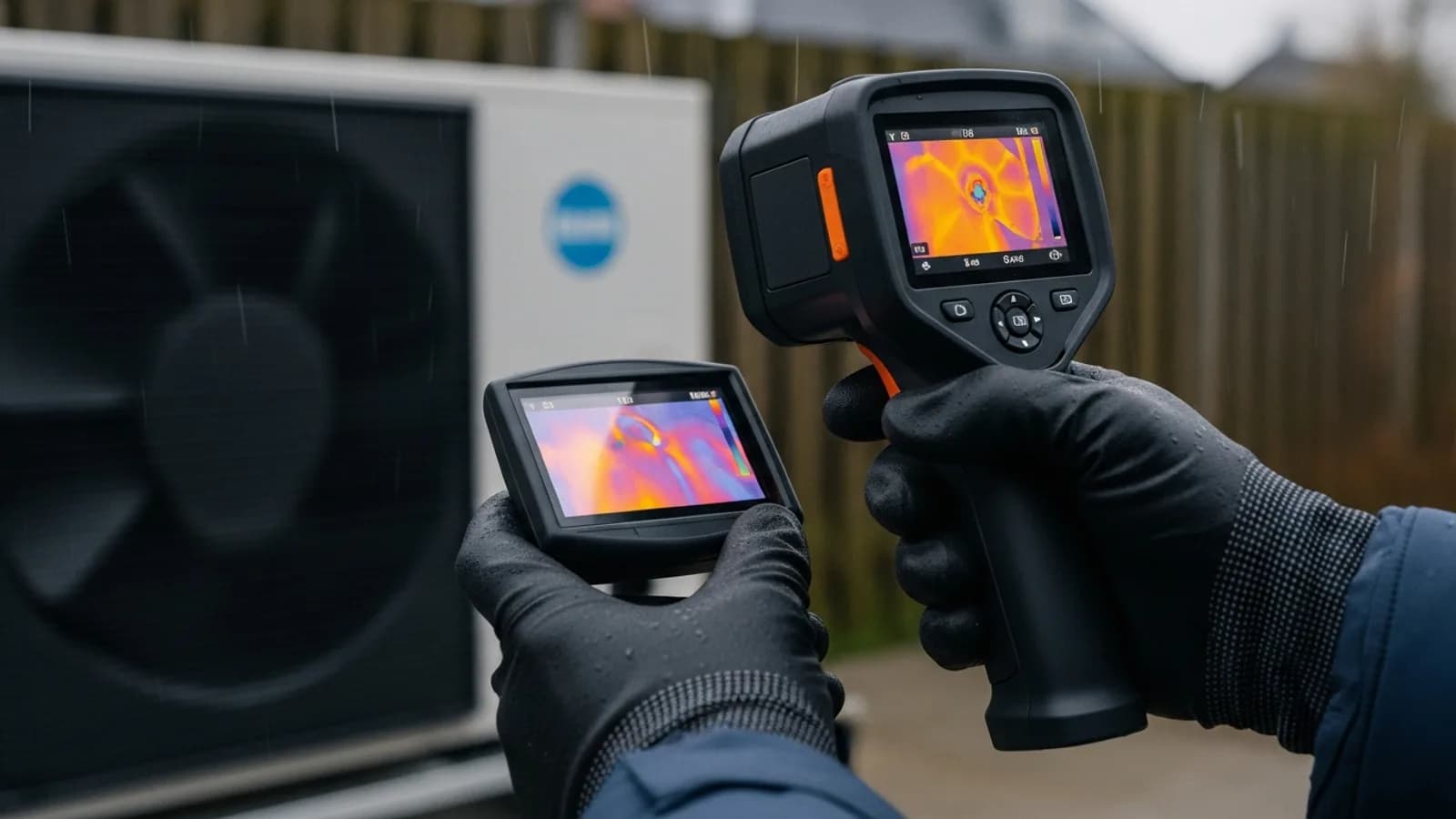
De beste manier om te weten of jouw huis geschikt is: laat een erkende installateur langskomen voor een beoordeling. Op warmtepompkiezen.nl vind je installateurs in alle 12 provincies die gratis of tegen lage kosten een woningcheck uitvoeren.
Vind een installateur bij jou in de buurt
Gerelateerde artikelen
Veelgestelde vragen
Is mijn huis geschikt voor een warmtepomp?
Vrijwel elk huis is geschikt voor een warmtepomp, maar het type verschilt. De geschiktheid hangt af van je isolatieniveau, je afgiftesysteem (radiatoren of vloerverwarming) en je energielabel. Een hybride warmtepomp werkt in bijna elke woning. All-electric vereist energielabel B of beter.
Kan een warmtepomp in een huis zonder vloerverwarming?
Ja. Een hybride warmtepomp werkt prima op bestaande radiatoren. Een all-electric warmtepomp kan ook op radiatoren, mits je lage-temperatuurradiatoren of overgedimensioneerde conventionele radiatoren gebruikt. Of je plaatst bij een grondige renovatie alsnog vloerverwarming.
Hoeveel kost isolatie voordat ik een warmtepomp kan plaatsen?
Dat varieert sterk per woning. Basisisolatie (dak + spouw + vloer) kost voor een gemiddelde tussenwoning 3.000-8.000 euro. Een grondige isolatie inclusief HR++ glas en kierdichting kan oplopen tot 15.000-25.000 euro. Veel isolatiemaatregelen zijn ook subsidiabel via de ISDE.
Wat als mijn VvE geen warmtepomp toestaat?
Ga in gesprek. Steeds meer VvE's passen hun reglementen aan. Presenteer een plan dat ingaat op geluidsoverlast, esthetiek en plaatsing. Een alternatief voor appartementen is een collectieve warmtepomp voor het hele gebouw, wat financieel en qua draagvlak aantrekkelijker kan zijn dan individuele units.
Kan ik een warmtepomp plaatsen als ik nog op stadsverwarming overgaat?
Als je wijk op de planning staat voor aansluiting op een warmtenet, overleg dan met je gemeente over de tijdlijn. In veel gevallen duurt het 5-10 jaar voor een warmtenet operationeel is. Een hybride warmtepomp is in die tussentijd een prima oplossing -- je bespaart direct gas en de investering heb je ruim terugverdiend voor de overstap naar stadsverwarming. ## Een installateur die je woning beoordeelt De beste manier om te weten of jouw huis geschikt is: laat een erkende installateur langskomen voor een beoordeling. Op warmtepompkiezen.nl vind je installateurs in alle 12 provincies die gratis of tegen lage kosten een woningcheck uitvoeren. [Vind een installateur bij jou in de buurt][link:/provincie/gelderland] ## Gerelateerde artikelen - [Hybride of all-electric warmtepomp? Zo kies je in 2026][link:/gids/hybride-vs-all-electric] - [Wat kost een warmtepomp in 2026? Compleet prijsoverzicht][link:/gids/warmtepomp-kosten] - [Erkend warmtepomp installateur vinden: waar let je op?][link:/gids/erkend-installateur-vinden]